Keep a ready home. One small habit at a time.
Plain, calm advice on stockpiling, emergency kits, water, first aid and the rest, from a countryman who has always kept a bit put by. No fuss, no fear, no fancy kit.
Everything, kept in its proper place
Water
How much to keep, what to keep it in, and when to swap it.
1 articleOpen →Shelf No. 2Food Storage
A store cupboard of things you already eat, bought a tin ahead.
3 articlesOpen →Shelf No. 3Recipes
Ration Book Kitchen: making a little go a long way.
2 articlesOpen →Shelf No. 4Medical
A sensible first aid box and a medicine cupboard that never runs low.
New articlesOpen →Shelf No. 5Sanitation
The toilet, washing and the bins, when the water goes off.
New articlesOpen →Shelf No. 6Steady Mind
Routine, company and something for your hands.
New articlesOpen →Shelf No. 7Natural Remedies
Herbs by the back door, and what they were used for.
New articlesOpen →Shelf No. 8Garden
A windowsill, a sack of potatoes and a few beans up a cane.
New articlesOpen →Shelf No. 9The Kit
Torch, radio, power bank, cash in a tin. The dull things that matter.
5 articlesOpen →Shelf No. 10The 90-Day Plan
If the shops close or the power stays off for a long spell, structure is what holds a house together. What to do, day by day, for ninety days.
90 days · 5 stages · a daily routineOpen the plan →Three jobs for this month
- 1
Read the checklist
The government's Be Ready list, gone through item by item. Ten minutes with a cup of tea.
- 2
Put water by
Three litres a head a day, for three days. The most important line on the list.
- 3
Three days of tins
Food that needs no fridge and no cooking, that you'd eat anyway.
When it goes on longer, a house needs a timetable
Most trouble is over in a day or three. For the rarer, longer spell, here is what to do and when, so nobody wakes up wondering.
Latest articles
How to Keep Warm in a Power Cut Without Heating
How to keep warm in a power cut without heating: one warm room, layers, draughts, moving, and why barbecues, stoves and generators never come indoors.
No. 5 · SanitationHow to Keep Clean Without Running Water
How to keep clean without running water: the shared handwashing bowl, when to use sanitiser and wipes, teeth, dishes and what official advice says to save.
No. 9 · The KitCar Emergency Kit: What to Keep in the Boot
A car emergency kit list drawn from the Met Office, Get Ready Queensland and Ready.gov: what to keep in the boot all year round, and what to add in winter.
No. 4 · MedicalHow to Store Medicines at Home: A Sensible Medicine Cabinet
How to store medicines at home so they stay safe and usable: the best place to keep them, fridge medicines, expiry dates, children, and returning old ones.
No. 9 · The KitBest Power Banks and Power Stations for a Power Cut
Which power bank or portable power station to keep for a power cut: how many phone charges you get, mAh vs Wh explained, and the sizes that suit each home.
No. 2 · Food StorageHow to Store a Three-Day Supply in a Small Home
How to store a three-day emergency supply in a flat or small house: where water and tins fit, the best storage boxes, places to avoid and how to rotate it.
Printed for the kitchen drawer

Bean Suppers
Twenty suppers from the beans you've put by, printed for the kitchen drawer. Six of them need no heat at all.
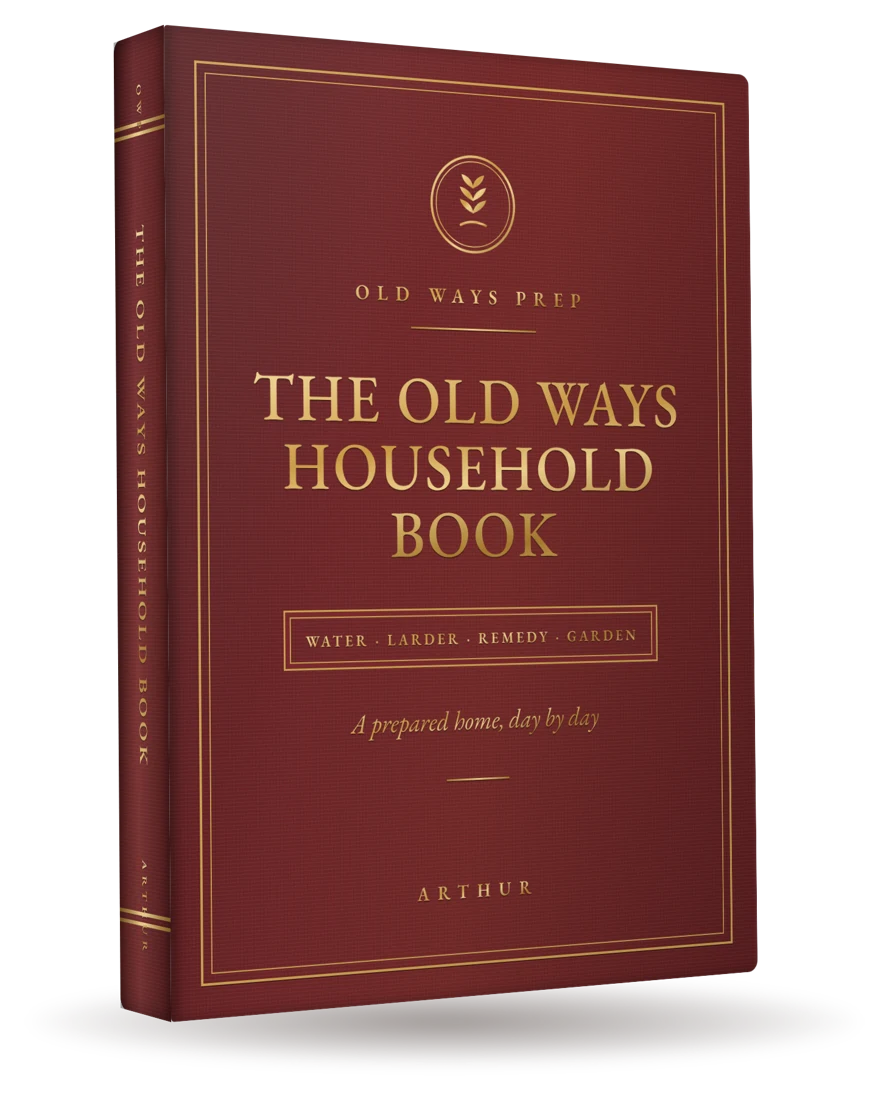
The Old Ways Household Book
Every shelf, the full 90-day plan and every checklist, bound in burgundy cloth and stamped in gold.
See the book →
“I've kept a tin of matches by the back door since 1961. Nobody ever thanked me for it, and nobody ever went without a light.”Arthur, 89 · About Arthur
The Larder Checklist
The three-day kit, the store cupboard and the six-monthly check, on one sheet for the back of the larder door. Plus one short letter a week from Arthur.
You'll get the checklist by email, then an occasional letter from Arthur. Unsubscribe any time.